

CASCADE’s mission is to improve the well-being, safety and rights of children and their families. We do this by generating new knowledge about children’s social care and sharing new and existing knowledge in ways that help services.
CASCADE Strategic Priorities
1. Reducing Structural Inequalities
Why this matters
Where a child grows up, their household income, and their ethnicity all shape their chances of coming into contact with children’s social care – and the support they receive once they do. These are not random differences; they are patterns driven by structural conditions that can be understood, challenged and changed.
Wales’s commitment as a Marmot nation puts tackling the social determinants of health and wellbeing at the centre of public policy. CASCADE is uniquely placed to bring rigorous evidence to this agenda for children’s social care, drawing on a longstanding programme of quantitative and qualitative research that has helped put child welfare inequalities on the map across the UK and internationally.
Our research focus
CASCADE’s inequalities programme uses large-scale administrative data to reveal how factors such as deprivation, ethnicity and household income drive unequal contact with social care. Our landmark four-nations study helped shape the growing field of child welfare inequalities research. We are now deepening this work with qualitative studies that explore how frontline practice responds to poverty and other social determinants, and we are building cross-disciplinary partnerships to develop new, inclusive research that amplifies the voices of underserved communities.
2. Supporting Loving Relationships
Why this matters
Loving, stable and lasting relationships are at the heart of what matters most for children, and evidence shows that social connections are key to achieving positive outcomes. Yet the very systems designed to protect children can, unintentionally, disrupt the bonds they depend on. Understanding how relationships are formed, maintained and protected throughout a child’s involvement with children’s social care is essential if services are to do more good than harm.
CASCADE places relationships – between children and their family members, between young people and their peers, and between families and their wider networks – at the heart of its research, asking how the social care system can better nurture the connections that shape identity, wellbeing and long-term outcomes.
Our research focus
Our research spans family relationships, relational permanence, and children’s experiences in and beyond care. We examine how services can protect and strengthen the relationships that matter to children, including those that endure after formal involvement ends. Current work explores what relational permanence looks like in practice, how participatory approaches can foreground children’s own perspectives, and what policy and practice conditions help sustain meaningful connections over time.
3. Developing Excellent Practice
Why this matters
The quality of children’s social care ultimately depends on the people delivering it – their skills, confidence and professional judgement. Yet we still know too little about what excellent practice looks like amid the day-to-day realities of high-pressure social work. As the workforce evolves and new tools, including artificial intelligence, begin to enter practice, there is an urgent need for research that keeps professionals and the families they work with at the centre.
CASCADE is committed to building a rigorous, grounded evidence base about what effective practice looks like – not in theory, but in real-world encounters between professionals, children and families.
Our research focus
Our programme of research spans two broad areas. The first examines how professionals talk to and work with families – the communication skills, relational approaches and direct-work techniques that underpin effective support, from qualified social workers to the wider workforce. The second explores how professionals assess, judge and decide – the reasoning processes behind good social work, and how emerging technologies such as AI decision-support tools are beginning to reshape this landscape.
4. Changing Organisations and Systems
Why this matters
Leadership, culture, supervision, resources and system design all shape whether professionals can exercise confident judgement, build trusting relationships and do good work. Getting the organisational conditions right is one of the most powerful levers for improving children’s social care at scale.
CASCADE brings together research on how organisations learn, improve and adapt – and how leadership and governance can create the conditions in which evidence-informed, relational and rights-based practice can thrive.
Our research focus
CASCADE has a substantial programme of research examining how organisational and systemic factors influence practice quality. This includes studies of service redesign, workforce development, implementation science and innovation – exploring how evidence-based approaches are adopted, adapted and sustained in real-world settings. We work in close partnership with local authorities, national bodies and practitioners to understand change from the inside, combining rigorous evaluation with practical relevance.
What we do

Generate internationally recognised primary research evidence

Make our research accessible to all, including people who use services, professionals and policymakers.

Develop social care research capacity in Wales by providing opportunities for researchers from undergraduate through to senior career stages.

Engage a range of collaborators in research, including children and young people, parents and carers, practitioners, policymakers and social care providers from the public, private and third sectors.
How we do it

We are only centre of its kind in Wales – promoting evidence & improving outcomes

We use a diverse range of research methods – Ethnography, interviews and focus groups, cohort and routine data sets, quasi-experiments, randomised controlled trials and reviews (rapid, systematic and realist)

We have strong links with policy and practice – Parents and children, social workers and senior managers, government (Welsh and UK) and the third sector

We use grant funding from a range of sources – research councils, government and the third sector
CASCADE Infrastructure Partnership
Our expertise brings together an exceptional partnership. CASCADE is the leading centre for evaluative research in children’s social care in the UK and sits within the School of Social Sciences (SOCSI), a leading centre of excellence in social sciences and education research with particular expertise in quantitative methods. The Centre for Trials Research (CTR) is an acknowledged national leader for trials and related methods, the School of Psychology was ranked 2nd for research quality in the most recent Research Excellence Framework and SAIL provides world-class data linkage. Together we believe we can create a step-change in the quality and use of children’s social care research that is unparalleled in the UK. Specifically, we can deliver high quality trials and evaluations; link data to understand long-term outcomes and involve service users (our public) in all elements of our research. Our intention is that these three strands will interact to generate an unrivalled quality of research.
We pride ourselves on supporting and developing people throughout their careers, including guiding the next generation of research leaders. Involving those with experience of receiving services across our work in consequential ways and engage the sector in sustained and meaningful efforts to understand and use research knowledge.
We don’t do this solely through our research work we also practically provide dessemination, Training & public engagement through our projects ExChange & Public involvement team.


ExChange provides free, high-quality training to support the ongoing development of social care professionals across Wales.
We bring leading researchers together with practitioners and service users to share expertise, research evidence and care experiences.
Together we learn and advise on research, impacting both policy and practice.
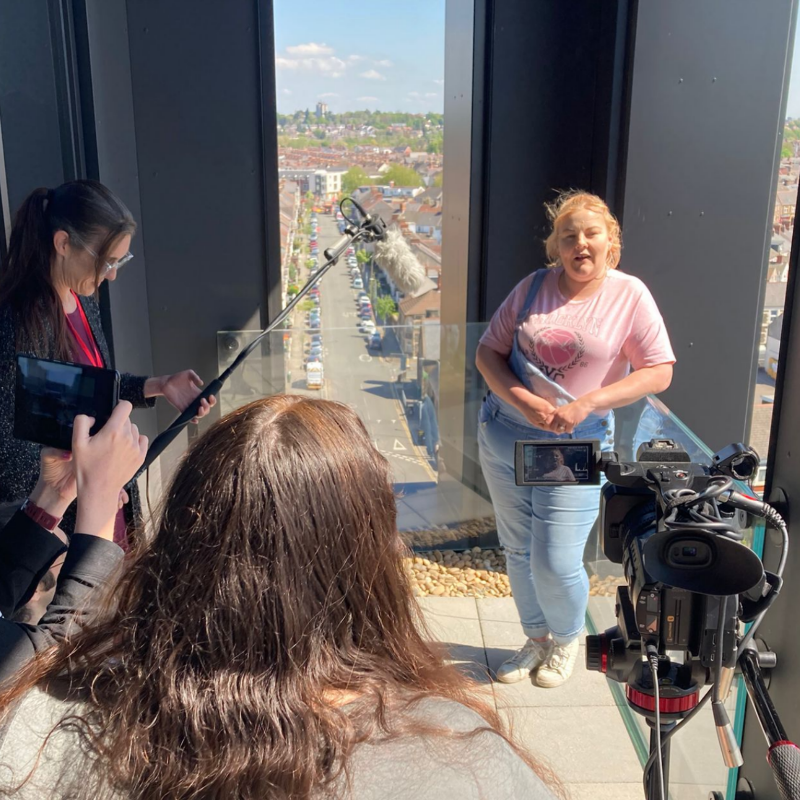

In order for our research to make the biggest impact, we work closely with children, young people, parents, carers and others to ensure that we are addressing the issues that really matter to them.
Driven to make a positive difference for children and families, Our Public Engagement and Involvement team works to involve members of the public in all stages of the research cycle.