
Eight months after joining CASCADE as a placement student, psychology undergraduate Kalila reflects on the lessons she’s learned about research, confidence, collaboration and stepping outside her comfort zone.
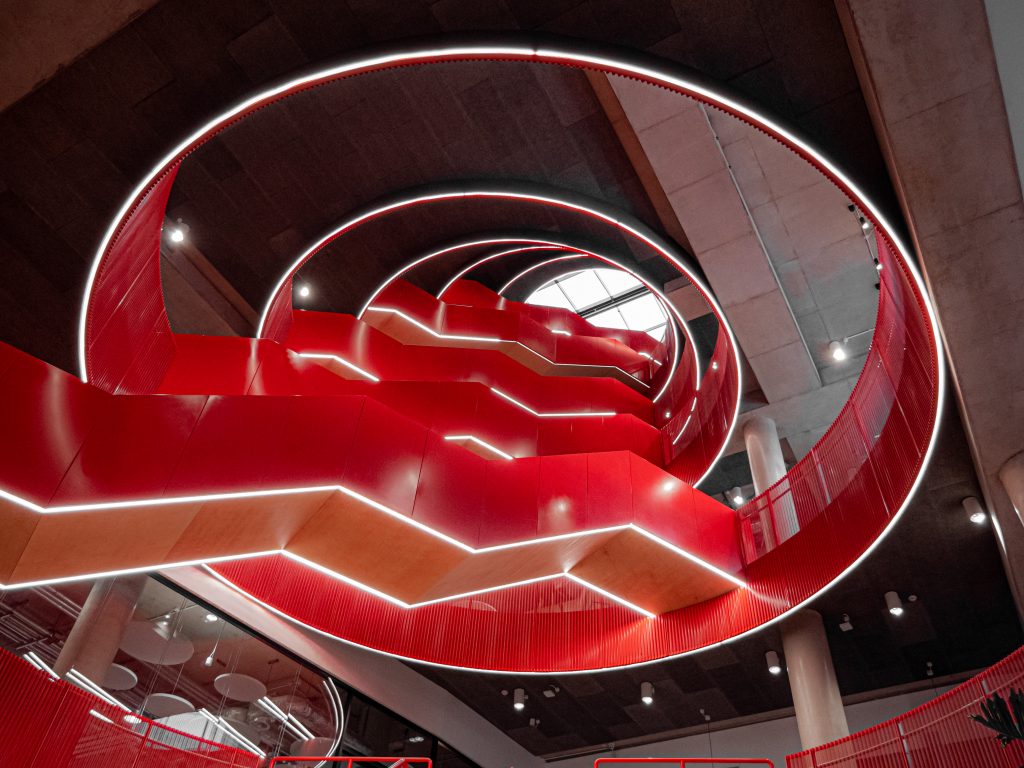
Approaching the Spark building on my first day at CASCADE, the air felt turbulent, the damp taste of rain wetting my lips as cool sunshine broke through the clouds. It was a classic day of Cardiff weather, and somehow it felt fitting: the uneasy coexistence of rain and brightness mirrored my own emotions as I arrived.
Walking through the daunting revolving doors to begin my placement, I had no idea how much I still had to learn. Now, eight months later, I can confidently say I have grown a great deal since then.
For any placement student (or other professional!) planning to join the welcoming research community at CASCADE, here are five things I’ve learned that I wish I’d known sooner…
Consolidation is your best friend.
At my first CASCADE meeting, I noticed something that stayed with me: notebooks. Every single one of my colleagues had a bursting notebook, with dog-eared corners and slips of paper overflowing. While I took notes in scattered documents, theirs were all compiled into one place, ready to be retrieved at a moment’s notice.
I quickly realised that while notes apps and sticky notes are useful, having one CASCADE-dedicated notebook helped me stay on top of my work, especially given the breadth of what I was involved in.
Later, I moved to Notion, reaching new levels of organised consolidation. Having one place for my to-do lists, Gantt chart, and frequently used documents has greatly reduced the anxiety of trying to track what needs doing and where everything is saved.
You’re allowed to have fun… they’re your coworkers, not your teachers.
As a placement student, joining a full-time workplace at 20 years old felt intimidating. When you feel uncertain of your place, it becomes easy to focus so much on appearing professional that you forget you’re allowed to be yourself.
It’s easy to forget that your colleagues are not just there for formal or administrative interactions, and they want to engage with you as a person.
Having fun and showcasing your personality can even be open doors professionally. It was only through loosening up and leaning into the more outgoing aspects of my personality that my coworker Rebecca recognised I’d be a good fit for other work, such as filming a Vox pop for Fostering Fortnight.
If you don’t ask, you don’t get.
I know it’s cliché, but clichés stick around for a reason. If there’s one thing I’ve learned while working in an office, it’s that people really do just need to be asked.
Sometimes it is as simple as “circling back” about an unanswered email. Other times, it means swallowing your nerves, knocking on an office door, and asking for what you want.
Thanks to this often-terrifying trick, I’ve had the chance to try blog writing, workshop facilitation, podcasting, and a range of other opportunities I might otherwise have missed.
Nobody knows everything, but together we can try to work it out.
During the first years of my undergraduate psychology degree, I imagined research to be a quiet and solitary practice. I expected to be greeted at CASCADE by silent offices and the relentless clicking of keyboards, so I was surprised to instead be greeted by a slice of cake and an offer to answer any questions I had. In many ways, this sums up what research at CASCADE is really like.
Meetings became brainstorming sessions, participants became co-producers, and asking questions was seen as a strength rather than a weakness. It quickly became clear that, regardless of seniority or academic experience, everyone at CASCADE had something valuable to contribute, working together towards shared research goals.
It might be difficult, but you can do difficult things.
I won’t pretend that every day at CASCADE has been easy. A placement year involves learning a huge amount about yourself, from building routines and managing time, to developing entirely new skills.
One of the hardest things for me was taking on a project with SCALE (CASCADE’s sister company) and finding myself thrown into the deep end of artificial intelligence research, a field I had no prior experience in. It drew heavily on statistics and computer science, subjects I found challenging, but I took every AI training opportunity I was offered, asked many questions, and eventually found myself becoming the person my friends came to with questions about AI.
It would have been easier to turn down the project and stay within my comfort zone; but then again, it might also have been easier to give up learning to walk and just stick to crawling. None of my colleagues stumbled into their PhDs or professorships– it took hard work and dedication, just like my placement has required of me. Life can be difficult, but we can all do difficult things.
Today, the sunshine is still cool, and the damp taste of rain still wets my lips, but it no longer feels like turbulence. Instead, it feels like coexistence: between sunshine and rain, difficulty and possibility, and naivety and learning.